
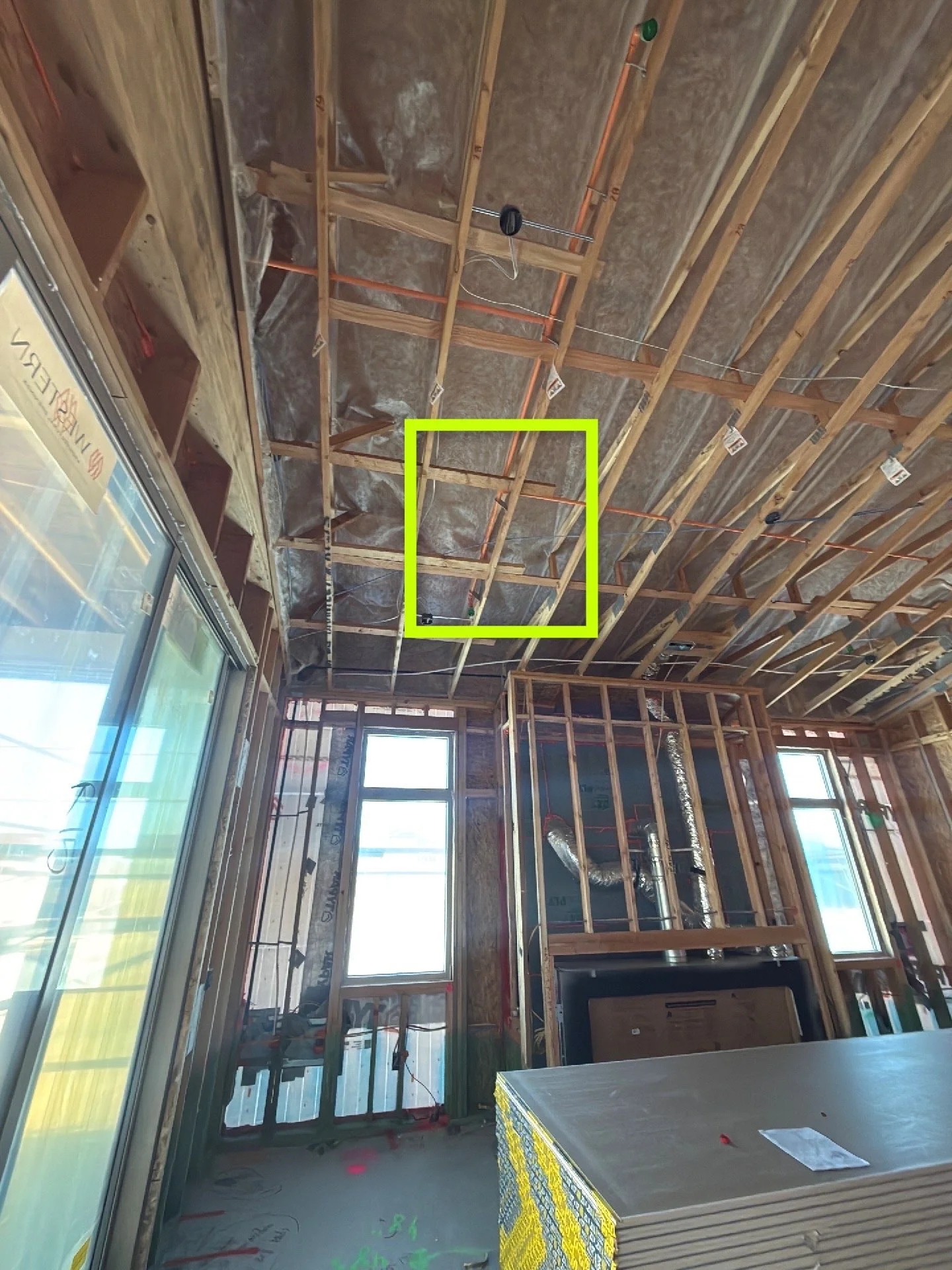
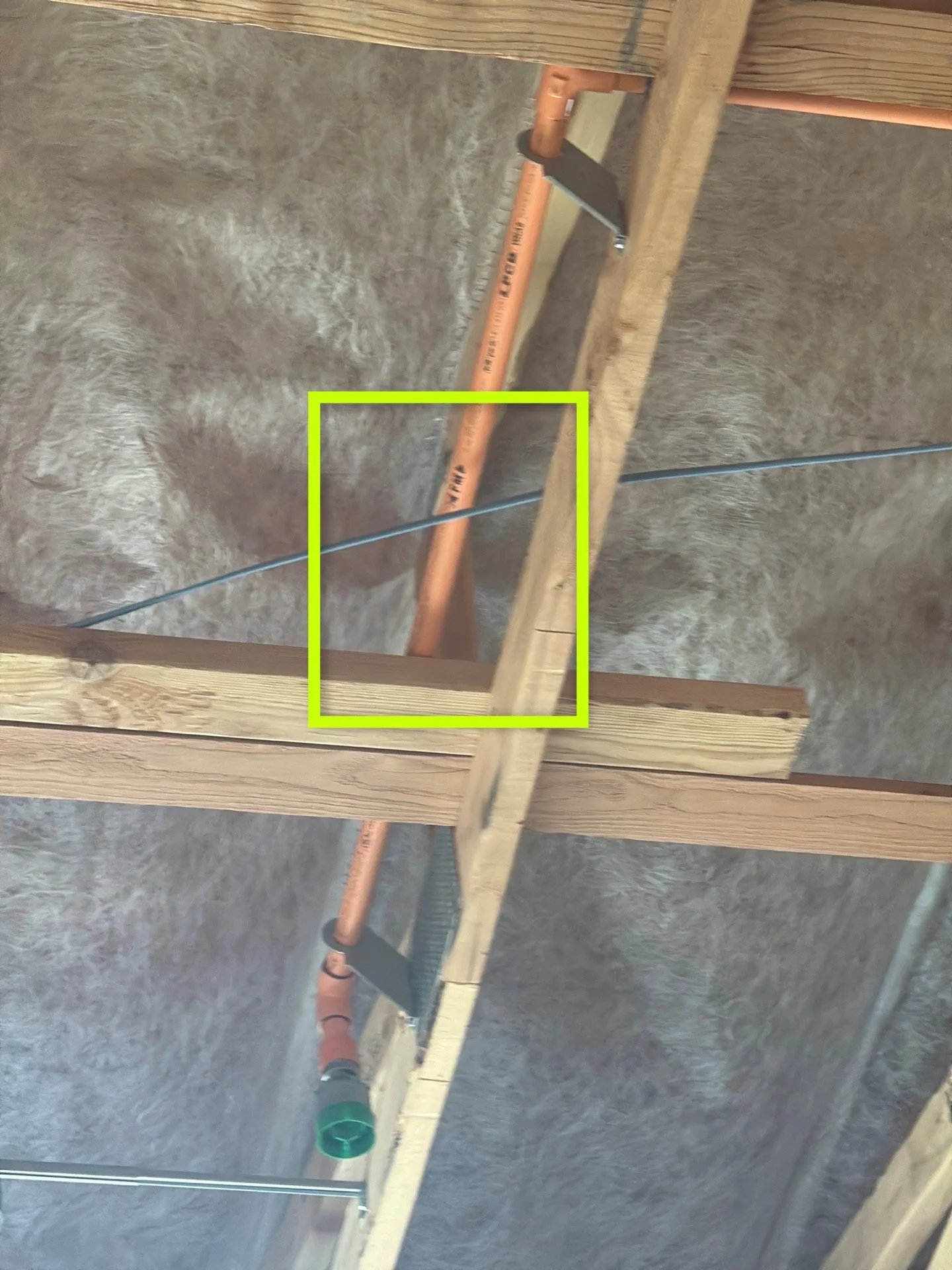
During a recent pre-drywall inspection in Las Vegas, we found sections of the fire sprinkler lines in the living room ceiling that were touching other building materials with no pipe insulation in between.
What This Means For You
Many new construction homes in Las Vegas are built with residential fire sprinkler systems. The water lines that feed the sprinkler heads are usually orange CPVC plastic pipe, and they run through the ceiling framing before the drywall goes up.
CPVC can react with certain building materials, such as some sealants, foams, cables and treated products. Where the pipe touches these materials, it's common to add a sleeve of pipe insulation to keep them apart.
Why It Matters
Over time, contact with incompatible materials can weaken CPVC, which can lead to cracking or leaks. A leak in a fire sprinkler line can cause water damage to ceilings and walls, and the system may not be ready to work if there's ever a fire.
Once the drywall is installed, these lines are hidden in the ceiling. That's what makes a pre-drywall inspection so valuable. It's the last chance to see the plumbing, wiring and framing before the walls are closed.
What We Typically Recommend
We recommend asking your builder to have pipe insulation installed at the areas where the sprinkler lines touch other materials. This is a quick fix at the pre-drywall stage and much easier than opening up a finished ceiling later.
Main Takeaway for Las Vegas New Construction Buyers
Small details inside the walls and ceilings can have a big impact down the road. A pre-drywall inspection in Las Vegas gives you a look at what's behind the drywall while it's still easy for your builder to address.
If you're building a new home, connect us with your builder as early as possible so we can coordinate a pre-drywall inspection at the right time.
