
Loose Radiant Barrier in a New Las Vegas Home
Some items found during a new home inspection are not always “defects” in the sense that something is broken or failing. But that does not mean they should be ignored. In new construction, documenting certain conditions before closing can protect you later, especially when those conditions could be misunderstood during a future inspection.
During a recent new home inspection in Las Vegas, we observed the radiant barrier loose and hanging in several areas of the attic. Radiant barrier is the reflective, foil-like material installed under the roof deck. Its job is to reflect heat and help reduce attic temperatures, which can support comfort and energy efficiency, especially in a hot climate like Las Vegas.
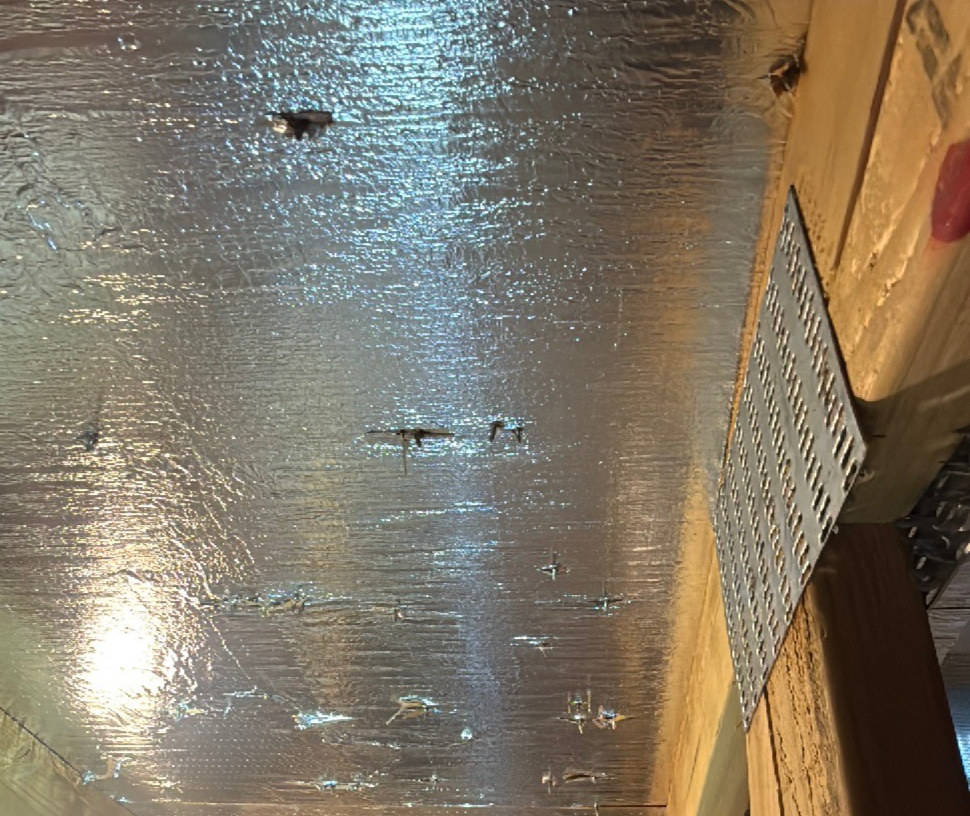
If a radiant barrier is hanging, wrinkled, or sagging, it can resemble what some people associate with past water intrusion.
What This Means For You
When radiant barrier is loose, it can look alarming if you do not know what you’re looking at. Homeowners sometimes worry it means the roof leaked or that moisture caused materials to sag. In many cases, that is not what is happening.
In a brand new home, loose radiant barrier is often related to installation timing, fastener spacing, or areas where work is still being finished. It can also happen if the barrier gets pulled or shifted while other trades are working in the attic. When this happens early in the construction process, it is often considered a normal condition and not a sign of a roof leak.
Even so, it is still useful to document because of how it may be interpreted later.
Why it Matters
Attics are one of the most common areas where future inspections flag possible moisture-related concerns. If a radiant barrier is hanging, wrinkled, or sagging, it can resemble what some people associate with past water intrusion. In other words, even if nothing is wrong, the appearance can raise questions.
Documenting it before closing helps in a few ways:
It shows the condition was present at the time of the pre-close inspection
It reduces the chance of confusion later if someone assumes it was caused by a leak
It provides context for future inspections, warranty discussions, or resale questions
It creates a clear paper trail of the home’s condition before move-in
This is especially helpful in Las Vegas where attic heat, ventilation, and roof performance are common topics during inspections.
What We Typically Suggest Before Closing
For any new home where radiant barrier is loose or hanging, it is usually reasonable to treat it as a documentation item first, and then decide whether further action is needed based on the overall attic conditions.
Practical next steps often include:
Ask the builder if the radiant barrier will be re-secured as part of normal finishing
Request that any loose sections be fastened back neatly where accessible
Make sure there are no additional signs that point to moisture issues, such as staining, wet wood, or active dampness
Keep inspection photos and the report for your records
If the attic shows no evidence of moisture intrusion, loose radiant barrier alone is often not an urgent repair. The value is in having it noted clearly before closing so it cannot be mischaracterized later.
Main Takeaway for Las Vegas Home Buyers
Loose radiant barrier in a brand new Las Vegas home is not always a defect, and it is often not a sign of a roof leak. But it is still worth documenting before you close because it can be misunderstood later as evidence of past moisture intrusion.
A thorough pre-close inspection helps you build a record of what was present before you moved in. If you are buying new construction and want clarity on items like attic conditions, roof components, and heat-control features, working with a home inspector in Las Vegas can help you move forward with better information and fewer surprises.
