Pre-Drywall Inspection in Las Vegas: Why Flue Height Above the Roof Matters
A pre-drywall inspection in Las Vegas is the best time to catch construction details that are easy to adjust now, but much harder to correct once the home is finished. One item that often gets overlooked because it is “up on the roof” is flue height. Even though it may seem minor, the height and placement of a flue can affect how well certain systems vent and how reliably they operate over time.
During a recent pre-drywall inspection, we observed a flue that appeared shorter than what is typically expected for that roofline. In plain terms, the vent termination did not appear to extend as high above the roof as we normally see for consistent exhaust and airflow around the roof surface.
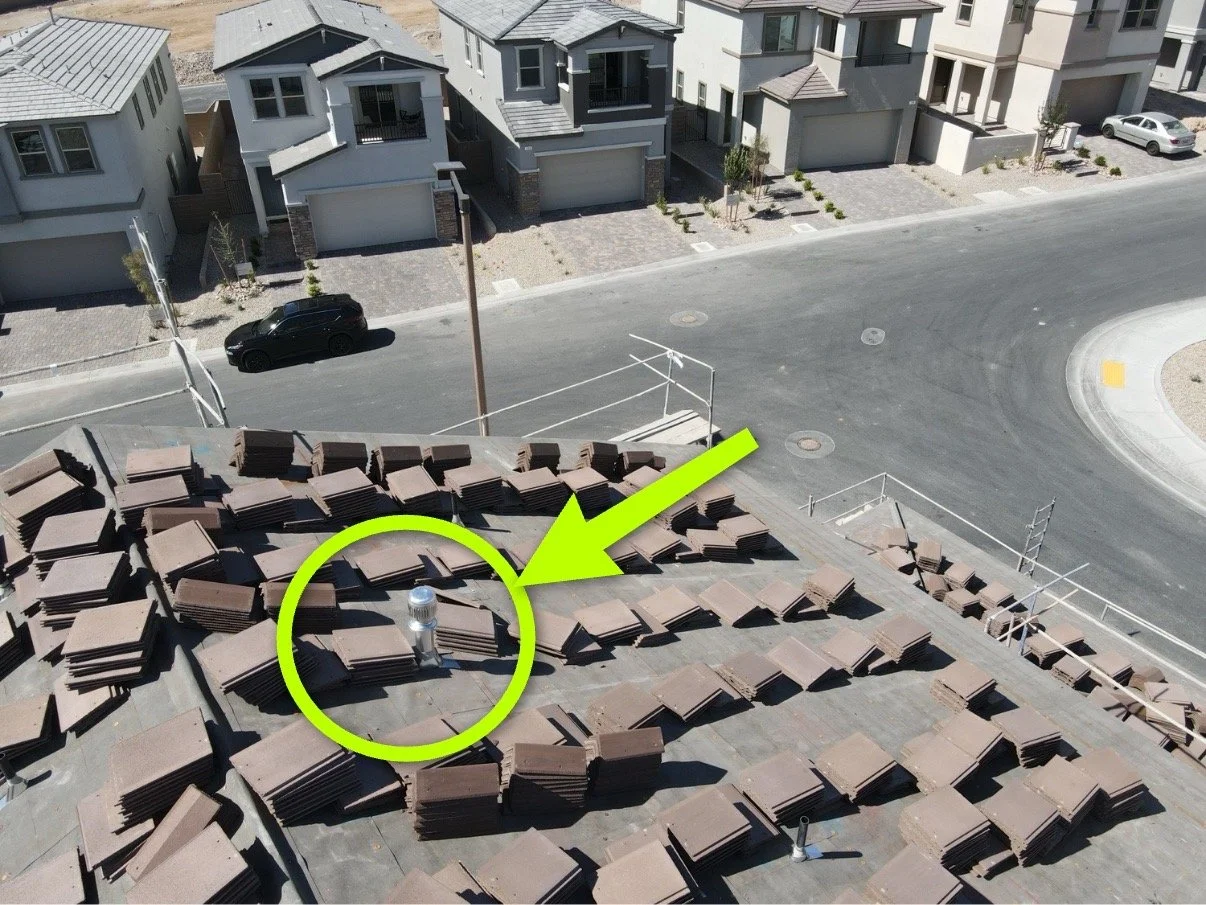
Flue Height Matters in Las Vegas Homes
Vent terminations are designed to exhaust safely and consistently, and rooflines can create wind and airflow effects that make height and placement matter.
What This Means For You
A flue (or vent termination) is designed to carry exhaust gases and moisture safely out of the home. Depending on the system, that could be related to HVAC equipment, a gas appliance, or another vented component. The goal is simple: exhaust should leave the home and continue moving away without being pushed back down toward the roof or pulled into areas where it does not belong.
When a flue is too short for the roof design, a few practical concerns can come up:
Exhaust may not vent as consistently, especially on windy days
Airflow around the roof can create turbulence that interferes with proper venting
Moist air or exhaust can linger closer to the roof surface than intended
The termination may be more likely to be affected by roof features nearby (peaks, valleys, parapets, or adjacent venting)
The important point is not that “shorter is automatically wrong,” but that flue height is typically chosen for a reason. Roof shape, slope, and nearby obstructions can all influence what height is needed for stable venting.
Why It Matters
Venting is one of those systems that you usually do not think about until something stops working properly. If a vent does not exhaust consistently, it can contribute to performance issues and nuisance symptoms that homeowners notice later, such as unusual odors, system shutdowns, or intermittent operation during certain weather conditions.
In some cases, improper vent termination height can also lead to moisture-related concerns. Moist exhaust that does not disperse well can increase staining or accelerated wear around the termination area. Over time, small venting issues can become bigger problems, especially if the system is sensitive to backdrafting, airflow restrictions, or wind effects.
This is also one of the reasons new construction inspections are so valuable. If something needs to be adjusted, it is much easier to address it now, while access is open and the builder still has trades scheduled.
What We Typically Suggest Doing During the Pre-Drywall Stage
For any home where a flue appears unusually short for the roofline, it is usually worth asking for confirmation rather than guessing. The practical next steps are straightforward:
Bring the concern to the builder’s attention early
Ask the HVAC contractor (or the appropriate trade) to confirm the flue height and termination meet the intended installation requirements for that home
Have the builder document any corrections, if changes are made, before the build moves forward
Pre-drywall is the ideal time for this because adjustments are typically simpler before the home is completed. Once the project is finished, changes can require more coordination, more labor, and more disruption.
Main Takeaway for Las Vegas Home Buyers
A flue that appears too short may be nothing, but it is important enough to verify. Vent terminations are designed to exhaust safely and consistently, and rooflines can create wind and airflow effects that make height and placement matter.
If you are buying a new build, a pre-drywall inspection in Las Vegas helps catch items like this early, when the builder can confirm, correct, and document them before the home is finished. If you want a second set of eyes during construction, working with a home inspector in Las Vegas who offers new construction and pre-drywall inspections can help you avoid surprises later.
