
Understanding the Service Life of Your Water Heater: Signs to Watch For
The typical service life of a water heater ranges from 8 to 12 years, depending on factors like maintenance, usage, and the quality of the unit. As your water heater approaches the end of its expected lifespan, it’s essential to be vigilant for signs of wear and potential failure. Here’s what to look out for to ensure your home remains safe and comfortable.
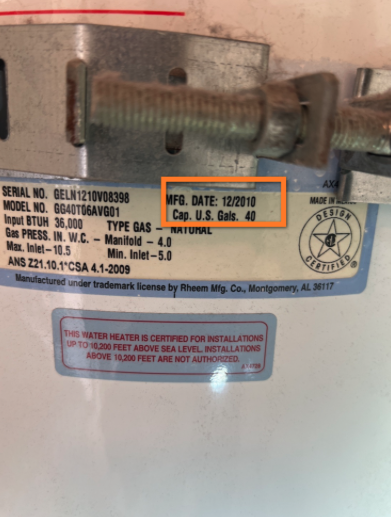
A water heater past its service life found during a home inspection in Las Vegas
Signs Your Water Heater May Need Attention
1) Age of the Unit: If your water heater is nearing or exceeding 8 to 12 years old, it’s time to start monitoring it closely. Check the manufacturer’s label for the installation date.
2) Rust or Corrosion: Look for any signs of rust or corrosion on the tank or around the connections. Rusty water or corrosion can indicate that the tank is failing and may need replacement.
3) Water Leaks: Any visible leaks around the base of the water heater or from the pipes connected to it should not be ignored. Leaks can lead to water damage and may indicate that the tank is compromised.
4) Strange Noises: If you hear unusual sounds coming from your water heater—such as popping, rumbling, or hissing—it may be a sign of sediment buildup or other issues that require attention.
5) Inconsistent Water Temperature: If you notice fluctuations in water temperature, such as lukewarm water when you expect hot, it could indicate a problem with the heating element or thermostat.
6) Discolored Water: Brown or rusty water coming from the hot tap can suggest corrosion inside the tank or pipe, indicating that the unit may need to be replaced.
7) Reduced Hot Water Supply: If you’re running out of hot water more quickly than usual, it may be a sign of decreased efficiency or an internal problem.
8) Increased Energy Bills: A sudden spike in your energy bills may indicate that your water heater is working harder to heat water due to inefficiencies, often linked to age or malfunction.
9) Odors: A foul smell coming from the water can suggest bacteria growth in the tank, especially in older units. This may require cleaning or replacement.
Maintenance Tips to Extend Water Heater Life
1) Regular Inspections: Conduct periodic inspections of your water heater to catch potential issues early. Look for leaks, rust, and other signs of wear.
2) Flush the Tank: Sediment buildup can impact efficiency and lifespan. Flushing the tank annually can help remove sediment and keep your heater running smoothly.
3) Check the Anode Rod: This rod helps prevent corrosion inside the tank. Inspect it every few years and replace it if it’s significantly corroded.
4) Maintain Proper Temperature: Set your water heater thermostat to around 120°F to reduce the risk of scalding and help save energy.
Conclusion
Being proactive about your water heater's maintenance and understanding the signs of impending failure can help you avoid unexpected disruptions. If you notice one or more of the above signs and your water heater is approaching or beyond its typical service life, it may be time to consider a replacement. Upgrading to a newer, more efficient model can save you money on energy bills and provide peace of mind. If in doubt, consult a licensed plumber to assess your water heater's condition and make recommendations.
