
Understanding the Risks of a Restricted and Bent Dryer Exhaust Duct
A dryer exhaust duct is responsible for venting hot, moist air from the dryer to the outside of your home. When the duct is restricted or bent, it can impede airflow, leading to various issues that can affect both your appliance and your home’s safety. If you’ve noticed that your dryer exhaust duct is restricted and bent, it’s essential to address this issue promptly. A compromised duct can lead to various problems, including reduced dryer efficiency, increased energy costs, and even safety hazards. Here’s what you need to know about the implications and necessary actions regarding a restricted and bent dryer exhaust duct.
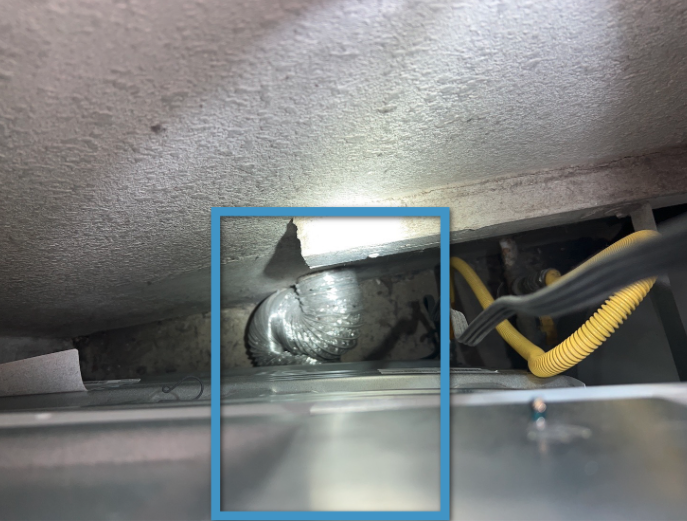
A restricted dryer exhaust duct, found during a home inspection in Las Vegas
Risks of a Restricted and Bent Dryer Exhaust Duct
1) Reduced Dryer Efficiency: A restricted duct can prevent the dryer from effectively expelling moisture. This can lead to longer drying times, making your dryer work harder and less efficiently.
2) Increased Energy Costs: As the dryer struggles to operate effectively due to airflow restrictions, it uses more energy, resulting in higher utility bills.
3) Overheating: A blocked duct can cause the dryer to overheat, posing a fire risk. Lint buildup and heat can ignite, making this a serious safety concern.
4) Lint Buildup: Restricted ducts are prone to lint accumulation, which can further exacerbate airflow problems and increase the risk of a fire.
5) Moisture Problems: Inadequate venting can lead to excess moisture in the laundry area, potentially causing mold growth and damage to surrounding structures.
What to Do If You Have a Restricted or Bent Duct
1) Inspect the Duct: Check the entire length of the dryer exhaust duct for kinks, bends, or visible lint buildup. Ensure that the duct is not crushed or pinched at any point.
2) Straighten the Duct: If the duct is bent, carefully straighten it out. Ensure it runs as straight as possible to allow for optimal airflow. Avoid sharp bends; if necessary, consider replacing sections of the duct with flexible or rigid ducting that maintains proper airflow.
3) Check for Proper Installation: Ensure that the duct is properly installed and not excessively long. The maximum length for a dryer duct should generally not exceed 25 feet, with fewer bends for optimal performance.
4) Consider a Professional Cleaning: If you’re unable to access the duct or if it’s particularly clogged, consider hiring a professional duct cleaning service. They have the tools and expertise to clean and assess the duct properly.
5) Upgrade to a Better Duct Material: If your current duct is made of plastic or has a flexible design that promotes kinks, consider upgrading to rigid metal ducting. This type of duct is more efficient and less prone to restrictions.
Conclusion
A restricted and bent dryer exhaust duct can lead to significant efficiency issues and safety hazards. By regularly inspecting, cleaning, and maintaining your dryer duct, you can ensure optimal performance and reduce the risk of fire or moisture-related problems. If you notice persistent issues or have concerns about the duct's condition, don’t hesitate to consult a professional for a thorough assessment and cleaning. Keeping your dryer vent system in good shape will contribute to the safety and efficiency of your home.
