
Pre-Drywall Inspection Find
A pre-drywall inspection in Las Vegas is the best time to catch problems inside the walls before insulation and drywall hide them.
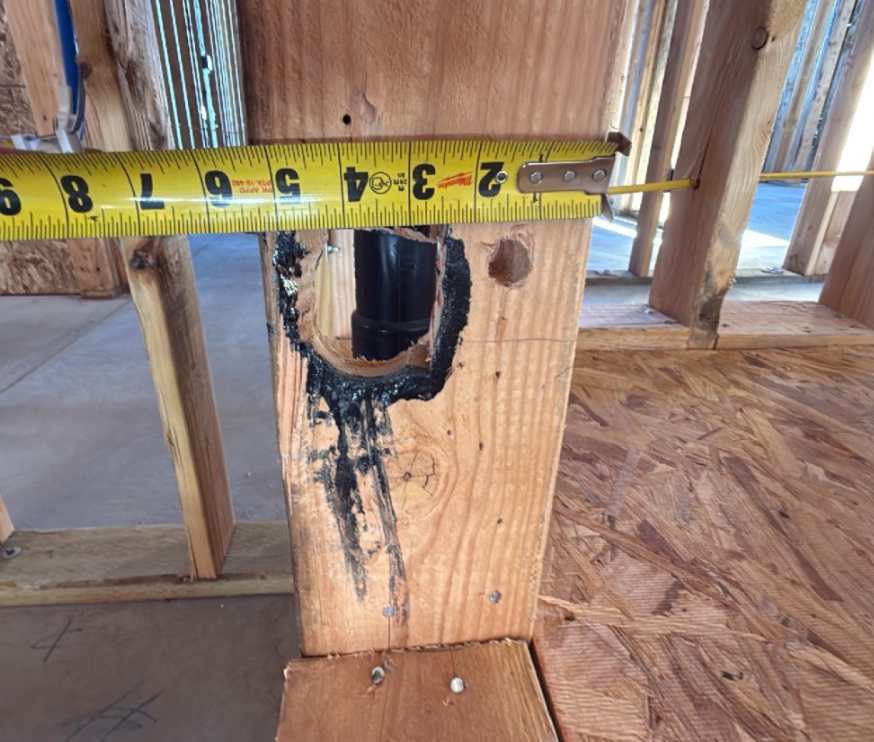
In this inspection, we found that one bore hole was drilled too close to the face of a stud, and an additional bore was drilled in the same cross section. In plain terms, the hole was too near the side of the stud where drywall will be attached, and then more material was removed from that same area. That combination can increase the risk of damage later and may reduce the stud’s ability to perform as intended.
What This Means For You
A stud is the vertical wood framing inside your walls. The “face” is the side of the stud closest to where drywall will be installed. When a hole is drilled too close to that face, there may not be enough wood left between the hole and the finished wall surface. That matters because future fasteners can reach that area.
Here is why it can become a problem:
Drywall screws, trim nails, or cabinet fasteners may hit a wire, pipe, or line behind the wall
Homeowners may later install shelving, TVs, mirrors, or cabinets and accidentally puncture what is inside the stud bay
Repairs are much easier before drywall than after the home is finished
A pre-drywall inspection in Las Vegas is the best time to catch problems inside the walls before insulation and drywall hide them.
Why it Matters
Even if a wall is not carrying roof or floor loads, studs still need to stay straight and stable. When multiple holes are drilled in the same section of a stud, more wood is removed from one spot. That can create a weak point that is more likely to split, crack, or flex over time.
This type of issue can also contribute to future cosmetic concerns, such as drywall movement or cracks, especially if that stud ends up supporting heavy finishes or mounted items.
Load Bearing vs Non-Load Bearing Walls
In this case, the wall appeared to be non-load bearing, meaning it likely is not supporting roof or floor weight. That reduces the chance that additional bracing or major structural reinforcement will be needed.
Even so, the hole location and amount of wood removed still matter. The bigger concern is often protection for what runs through the stud and making sure the framing meets typical building standards.
We Recommend Addressing It Before Drywall
We recommend bringing this item to the builder’s attention before drywall is installed. Common corrections may include:
Installing metal nail plates to protect the area near the stud face
Adjusting the routing so the bore is farther from the drywall side
Having the builder confirm the installation meets applicable requirements
If there is any uncertainty, having an engineer review the condition
Main Takeaway for Las Vegas Home Buyers
Pre-drywall is when fixes are usually fastest and least expensive. That is why a pre-drywall inspection in Las Vegas can be so valuable for new construction buyers. It helps catch details like hole placement and stud modifications early, when the builder can correct them and document the change before the walls are closed up.
If you are building a home and want a second set of eyes on the framing, wiring, and plumbing before drywall, a home inspector in Las Vegas can help you avoid expensive surprises later.
